Tracks and Town

(1876-1900)

The arrival of the railroad transformed a quiet settlement into a growing town. Arlington’s founding and subsequent incorporation marked the beginning of civic identity and economic opportunity.
1876
Hayter asked to Survey Land for Railroad

Andrew Hayter was asked in 1876 to locate the railroad through eastern Tarrant County and lay out a tiny, half-mile-square settlement between Dallas and Fort Worth. The railroad designers needed in-depth knowledge of the area and its terrain, as well as a plentiful source of timber to construct the road bed. Hayter could supply the necessary surveying knowledge, and also owned property filled with large timbers that could be furnished to the railroad.

July 19, 1876
City Founded
T&P train in Arlington, TX, 1896

Settlement is established along the Texas and Pacific Railway, beginning its journey as a vibrant community. That first T&P locomotive, Engine No. 20, met by a cheering crowd, rolled into the town on July 19, 1876, there to find mostly unplowed buffalo prairie marked with dirt streets and survey stakes.
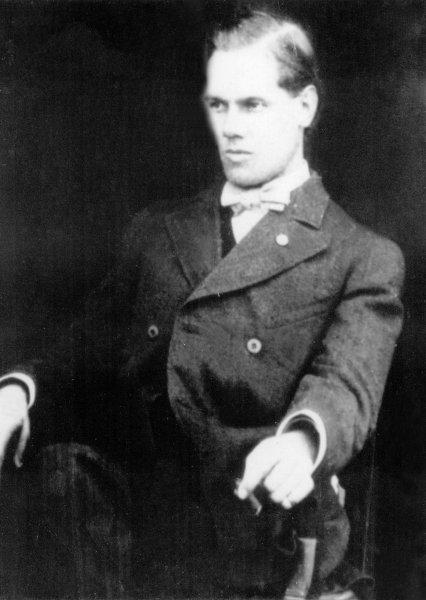
Arlington's First Mayor

Mayor Carver Dixon King

Carver Dixon "Uncle Dutch" King becomes the first mayor of Arlington. Learn more about Arlington's first mayor

Johnson Station Baptist Church Moves

Johnson Station Baptist Church moves with the community three miles north, eventually becoming known as First Baptist Church of Arlington

1877
Arlington Named

Arlington's first three stores, 1876-1897; James Ditto, first post office, and R.W. Collins (partner); Hutchinson store; Amos Bledsoe store; J.S. McKiney in suit; George Lampe, blacksmith

Arlington's first three stores, 1876-1897; James Ditto, first post office, and R.W. Collins (partner); Hutchinson store; Amos Bledsoe store; J.S. McKiney in suit; George Lampe, blacksmith

Settlement renamed "Arlington" (previously known as "Johnson" or "Hayter") at Rev. Hayter's request. The birth of Arlington caused the demise of tiny Hayterville. The post office was soon moved. Arlington, Texas is officially recognized by the United States Postal Service. Hayterville was abandoned.

1878
First Church Congregation

A group of Methodists meet in Schults' lumberyard at Mesquite and Front Streets and organize the first church congregation in Arlington's original township.

J.D. Cooper Home Built
J.D. Cooper home, originally built at Cooper and Abram Streets (later moved to Meadowbrook Park, the house was destroyed by an accidental fire on Halloween night in 1998 and eventually demolished).
Arlington Cooper Memorial Library, in Meadowbrook Park, Arlington, TX, 08/05/1954. Photo Courtesy: Fielder Museum / Arlington Historical Society.

Arlington landowner James Daniel Cooper builds a majestic colonial house on the corner of what is now Cooper St. and Abram St.

1880
Population: 275
Black and white photo of central Arlington.
Black and white photo of central Arlington. Photo Courtesy: Fielder Museum / Arlington Historical Society.

U.S. Census shows a population of 275 people with eight general merchants, three drug stores, a lumber dealer, two physicians, a hotel keeper, a saloon operator and various other occupations including farming.

1883
First Newspaper

William Timmerman and Colonel Thomas Spruance establish the city's first newspaper called "The World."

1884
April 21, 1884
Incorporation
Written documentation from Tarrant County Judges certifying the Order of Incorporation for Arlington.

Arlington officially incorporates, setting the stage for civic growth and community spirit.

Arlington Fire Department Starts
Another fire of major proportions hits Arlington on March 10, 1909. This is the oldest known picture of the Arlington Fire Department.

For 140 years Arlington firefighters have been serving the citizens and visitors of Arlington, Texas. Hundreds of men and women have served in the department since 1884. The first few used buckets and wooden ladders to serve a small city on the railroad.

1887
Cemetery Society Founded

Cemetery Society (later Arlington Historical Society) founded.

1891
Public Well Campaign

Rice Wood Collins, a successful merchant, starts public well campaign for access to water.

1892
December 24, 1892
“Christmas Eve Massacre”
Two men with firearms during Christmas Eve Massacre.

“Christmas Eve Massacre” gunfight leaves four men and a horse dead on Main Street near the rail station.

1893
Original Mineral Well

The original mineral well is drilled by a wood-powered steam engine.

1894
First City Marshal / Arlington Police Forms

The Arlington Police Department's roots go back to 1894 with the appointment of the first city marshal, W.M. Douglass, but it evolved significantly over time, with a major pivotal moment in 1934 when Chief A.C. (Ott) Cribbs began leading a more formalized force, growing from early roles where fire chiefs also served as police and developing into the modern department it is today.

1895
September 1895
Arlington College (UTA) Opens
L.M. Hammond portrait on the left and William M. Trimble on the right.
L.M. Hammond and W.M. Trimble receive a Warranty Land Deed to establish Arlington College. The school offers classes from first grade through high school in subjects such as Latin, history, algebra, geometry, grammar, reading, literature, government, art, music, elocution, and penmanship. About 75 students attend during its first year. Photo courtesy: University of Texas at Arlington.

Arlington College is established (now UTA). UT Arlington is the third-largest producer of college graduates in Texas and offers over 180 baccalaureate, masters, and doctoral degree programs.

1896
William W. McNatt Sells Plots

William W. McNatt, a merchant and farmer, sells a portion of his farm to sell lots for burial. Many Arlington pioneers are buried thereafter. In 1896, William W. McNatt, a merchant and farmer, sold a portion of his farm to sell lots for burial. Located at Mary and Mitchell Streets, graves of many city pioneers can be found here.

1900
Population: 1,079
Arlington Mineral Well in 1900.
Arlington Mineral Well in 1900. Photo Courtesy: Fielder Museum / Arlington Historical Society.